



Africa’s Construction Equipment Market 2025: Growth, Trends, and What Contractors Need to Know

Africa’s Construction Equipment Market 2025: Growth, Trends, and What Contractors Need to Know
Africa’s construction sector is entering 2025 with two contradictory truths. The continent’s infrastructure financing gap remains one of the widest in the world, yet Africa’s construction equipment market is growing faster than the broader construction industry. For contractors, fleet owners, and equipment dealers, understanding this gap between infrastructure ambition and infrastructure delivery is the single most useful piece of market intelligence available right now, and it’s central to the construction industry trends shaping Africa through 2026 and beyond.
This article breaks down the numbers, the policy pipeline behind them, and the operational trends contractors need to plan around for the rest of 2025 and into 2026.
Africa’s Construction Equipment Market, By the Numbers
Africa’s broader construction industry was valued at roughly $219.66 billion in 2024 and is estimated at $232.08 billion in 2025, according to Next Move Strategy Consulting. That headline figure grows slowly on paper (just 0.7% CAGR through 2030), but it masks a much sharper divergence underneath: Africa’s construction equipment market itself is expanding several times faster than construction output as a whole, a pattern that shows up in every country-level breakdown below.
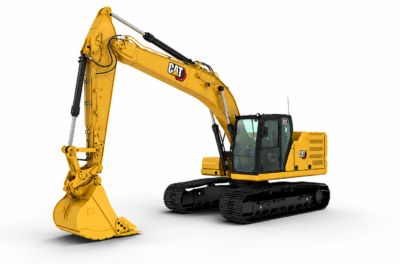
According to 6Wresearch, the African construction equipment market is forecast to grow at a 6.10% CAGR between 2025 and 2031, driven by demand for earthmoving equipment, rising urbanisation, and expanding mining and irrigation activity. Earthmoving machinery (excavators, backhoes, and loaders) continues to dominate segment share, a pattern consistent across nearly every African market currently tracked.
Zooming into the combined Middle East and Africa equipment market, ResearchAndMarkets pegs the region at $4.31 billion in 2025, rising to $4.64 billion in 2026 and $6.74 billion by 2031 (a 7.74% CAGR over that five-year window), with excavators alone accounting for roughly 35–37% of category revenue. Machines rated at or below 100 horsepower already account for 44.28% of 2025 demand and are the fastest-growing power segment at an 8.13% CAGR, reflecting how African housing and township-scale projects favor compact, versatile equipment over heavy-duty fleets.
Country-level detail tells the sharper story:
- South Africa’s construction equipment market reached $1.75 billion in 2024 and is projected to hit $2.92 billion by 2033 (5.26% CAGR), according to IMARC Group. The country’s wider construction industry is expected to reach ZAR 160.65 billion in 2025, having posted a 9.5% CAGR between 2020 and 2024, before settling into a steadier 3.9% CAGR through 2029 toward ZAR 195.4 billion by 2030.
- Nigeria’s construction equipment market is projected to reach NGN 780 billion (roughly $480 million) by the end of 2026, growing at an annual rate of around 3.1% through 2028. Under the ECOWAS Common External Tariff, capital equipment (including construction machinery) sits in Band 0, meaning it enters Nigeria at 0% import duty, a structural advantage over markets where duties run 5–20%.
- East Africa (Kenya, Uganda, Tanzania, Ethiopia) continues to see strong demand growth for concrete and road machinery, tied directly to active national road-building programs.
The Infrastructure Investment Story: PIDA and Africa’s Financing Gap
No conversation about Africa’s equipment demand is complete without the Programme for Infrastructure Development in Africa (PIDA): the African Union’s flagship framework for infrastructure investment in Africa, run jointly with AUDA-NEPAD, the African Development Bank, and the UN Economic Commission for Africa.
PIDA’s first implementation phase, PIDA PAP1 (2012–2020), identified 51 cross-border programs comprising 409 individual projects, and delivered more than 16,000 km of roads, 4,000 km of railways, and 3,500 km of transmission lines. Yet by 2025, only 18% of PAP1’s targeted projects were fully operational, a gap that has shaped the design of the second phase.
PIDA PAP2 (2021–2030) took a deliberately narrower approach: 69 priority projects, down from 433 under PAP1, selected specifically for cross-border relevance, bankability, and climate resilience. AUDA-NEPAD estimates PAP2 requires $160.7 billion in total investment (roughly $16.1 billion per year), spread across transport, energy, water, and ICT infrastructure.
Momentum is building around closing that funding gap. At the Africa Infrastructure Financing Summit in Luanda (October 2025), co-hosted by AUDA-NEPAD and the African Union Commission, investors committed $18 billion toward 38 bankable projects and 11 additional PIDA-aligned initiatives. That builds on a track record in which African Union member states contributed approximately 40% of the $82 billion mobilized under PIDA between 2012 and 2022.
The scale of unmet need remains the central fact contractors should understand: the African Development Bank estimates that the continent requires $130–170 billion annually in infrastructure investment, yet actual mobilised financing consistently falls short of that target. As of 2024, only 58% of Africa’s population had electricity access, leaving roughly 600 million people without power, a gap driving continued investment in energy infrastructure, specifically from hydropower projects like the 700MW Luapula Hydropower Project (Zambia–DRC) to solar and transmission corridors across North and Southern Africa, such as the Benban Solar Park in Egypt.
For equipment suppliers and contractors, PIDA’s pipeline functions as a demand forecast: every certified or funded project translates directly into tenders for earthmoving equipment, cranes, concrete plant, and heavy transport. For a deeper breakdown of how the $360 billion full-programme commitment maps to specific equipment demand by sector, see our companion piece on Sub-Saharan Africa’s infrastructure pipeline.
Regional Snapshot: Where the Demand Is Concentrated
Africa’s construction equipment market is not evenly distributed. A handful of markets account for the bulk of activity, each with distinct construction industry trends and infrastructure investment priorities:
Nigeria remains West Africa’s largest single equipment market by transaction volume, helped by its 0% duty structure on capital equipment. Government-financed projects like the Lagos Railway extension and Lekki Deep Sea Port Phase 2 are active demand drivers, alongside a steady base of private contractors sourcing through Chinese EPC sub-contractor channels.
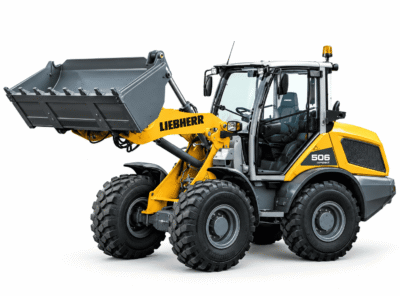
South Africa functions as both a consumption market and a regional distribution hub: used equipment exporters based in South Africa routinely supply buyers across Kenya, Nigeria, Ghana, and Tanzania. Domestically, engineering firms are increasingly leasing compact loaders rather than buying them to manage currency exposure, a trend likely to accelerate through 2026.
East Africa (Kenya, Uganda, Tanzania, Ethiopia) continues to see concentrated demand for road construction and concrete machinery, tied to active national road programs. Enquiries for later-model Caterpillar equipment and rough-terrain cranes have been particularly strong from this region, according to equipment suppliers tracking cross-border trade.
Egypt and North Africa sit somewhat apart from Sub-Saharan patterns, with construction output more closely tied to state-led megaprojects and a more mature regulatory and customs environment, though the region still contributes meaningfully to the roughly half of continental construction output generated by Egypt, Nigeria, and South Africa, per UNEP estimates. Central African nations, by contrast, remain significantly underrepresented, contributing only around 2% of continental construction activity, a gap that PIDA PAP2’s corridor-based project selection is partly designed to address.
What’s Driving the Construction Equipment Demand in 2025
Several forces are converging to push Africa’s construction equipment market above the continent’s broader construction growth rate, and they explain most of the construction industry trends contractors are seeing on the ground this year:
Housing programs. Egypt, Kenya, Nigeria, South Africa, and Ethiopia have each set ambitious multi-million-unit housing targets, driving sustained demand for compact loaders, backhoes, and concrete mixers suited to residential-scale township development.
Mining and irrigation expansion. Beyond infrastructure corridors, mining activity across Southern and Central Africa continues to drive demand for higher-horsepower dozers and haul equipment, while irrigation projects support demand for excavators and trenching machinery in agricultural regions. Mining alone is a large enough demand driver to warrant its own analysis: see our complete guide to mining equipment in Africa for a category-by-category breakdown of hire and purchase options.
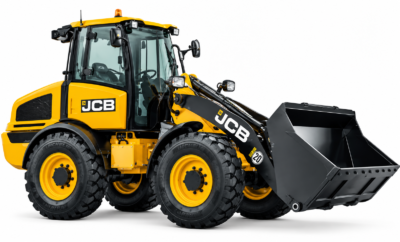
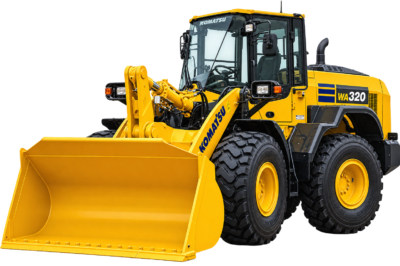
Used equipment demand remains structurally strong. Buyers in Nigeria, Kenya, Ghana, and Tanzania continue to source significant volumes of used Caterpillar, Komatsu, and JCB machinery through specialist exporters based in South Africa, the UK, and the UAE, a reflection of financing constraints that make new-equipment ownership impractical for many contractors, even as demand for machinery itself grows. If you’re sourcing second-hand machinery, our guide to buying used construction equipment in Africa without getting burned covers inspection checklists and red flags.
Rental models are gaining ground. Currency volatility, illustrated by the Nigerian naira trading between NGN 1,500–1,700 per USD through 2025–2026, is pushing engineering firms in South Africa and elsewhere toward leasing compact equipment rather than owning it outright, reducing exposure to FX risk on capital purchases. Contractors weighing this trade-off directly can work through our rent vs buy decision guide for a full total-cost-of-ownership comparison.
Key Construction Industry Trends in Africa Contractors Need to Watch
These are the construction industry trends in Africa most likely to affect sourcing decisions through the rest of 2025:
Diesel still dominates, but the gap is narrowing slowly. Across the combined Middle East and Africa equipment market, diesel and internal combustion machinery accounted for 72.63% of the market in 2025, valued for their reliability in harsh operating environments. Electric and hybrid equipment is growing faster in percentage terms (around 7.75% CAGR), but battery degradation and sparse charging infrastructure continue to limit adoption outside of major metros and mining operations.
Chinese OEMs and buyer channels are reshaping procurement. In Nigeria specifically, three buyer channels now dominate equipment procurement: Chinese EPC contractors executing government-financed infrastructure (CCECC, China Harbour Engineering Company, Sinohydro), local conglomerates, and rental companies. Chinese brands have also set a price floor in several markets, commonly cited at $30,000–$50,000 for mid-size equipment, pushing a “mid-market sweet spot” of $40,000–$70,000 for buyers seeking a balance of price and durability. For an independent look at how these brands actually perform on African sites, read our review of XCMG, SANY, and Liugong.
Import logistics remain a real bottleneck. Even in duty-free corridors like Nigeria’s ECOWAS Band 0 classification, clearance still typically requires a Clean Report of Findings from an approved inspection agent, Form M registration through an authorized bank, and a Pre-Arrival Assessment Report, a process that commonly takes 4–6 weeks for documentation plus 2–3 weeks for port clearance at hubs like Lagos.
Compact and mid-horsepower equipment is the growth segment. As township housing and urban infill projects multiply, contractors are shifting toward equipment under 100 HP for its lower operating cost, simpler hydraulics, and higher uptime compared with larger machines suited only to major infrastructure corridors.
Financing structures are shifting risk toward buyers. With naira and other regional currencies under pressure, suppliers increasingly require confirmed letters of credit from tier-one banks or 30–50% advance payment via wire transfer before shipment, a meaningful change in working capital requirements for contractors sourcing equipment internationally. Our comparison of hire purchase, leasing, and bank loan structures for African contractors breaks down which financing route fits which buyer profile.
What This Means for Contractors
For contractors and fleet operators navigating Africa’s construction equipment market 2025, three practical implications stand out:
- Track the PIDA PAP2 pipeline directly, not just national budget announcements. Certified, bankable projects under PAP2 are the clearest leading indicator of where infrastructure investment and tender activity will concentrate over the next 12–24 months, particularly in transport corridors and energy infrastructure.
- Budget for FX volatility as a line item, not an afterthought. Currency-driven financing terms, including advance payments, confirmed LCs, and rental preference over ownership, are becoming standard practice rather than exceptions, especially in Nigeria and other markets with managed or volatile currencies.
- Match the equipment class to the project type deliberately. The fastest-growing demand segment is compact, sub-100 HP machinery for housing and urban projects, a different buying strategy than sourcing for mining or major transport corridor work, where higher-horsepower fleets and longer-term rental contracts dominate.
Ready to act on this data? Browse verified construction equipment listings on PlantBridge Africa →
Frequently Asked Questions
How big is Africa’s construction equipment market 2025?
Africa’s construction equipment market is forecast to grow at a 6.10% CAGR from 2025 to 2031, according to 6Wresearch, while the combined Middle East and Africa equipment market is valued at $4.31 billion in 2025 and is forecast to reach $6.74 billion by 2031.
What is PIDA PAP2, and why does it matter for equipment demand?
PIDA PAP2 is the African Union’s second infrastructure priority plan (2021–2030), covering 69 cross-border projects across transport, energy, water, and ICT sectors, requiring an estimated $160.7 billion in total investment. Each funded project generates direct tender demand for earthmoving, transport, and construction machinery.
Why is the demand for used equipment still so strong across Africa?
Financing constraints and currency volatility make new-equipment ownership impractical for many contractors, sustaining strong demand for used Caterpillar, Komatsu, and JCB machinery sourced through specialist exporters in South Africa, the UK, and the UAE.
Which equipment segment is growing fastest?
Machines rated at or below 100 horsepower are the fastest-growing power segment, driven by township housing and urban infill projects that favor compact, lower-cost equipment over heavy-duty fleets.
Conclusion: Navigating Africa’s Two-Speed Equipment Market
Africa’s construction equipment market 2025 is really two markets moving at different speeds. The continent’s broader construction industry is growing slowly and unevenly, weighed down by financing gaps, currency volatility, and a PIDA PAP1 legacy where only 18% of targeted projects reached completion. But the equipment segment itself (the machines contractors actually need to buy, rent, or import) is outrunning that broader trend, growing at roughly 6–8% annually depending on the market, pulled forward by housing programs, mining expansion, and a PIDA PAP2 pipeline now backed by fresh infrastructure investment commitments out of Luanda.
These construction industry trends in Africa point in one clear direction: contractors who track infrastructure investment at the project level, not just continent-wide averages, will out-position those reacting after tenders are already awarded. For contractors, the practical takeaway isn’t “the market is growing” in the abstract; it’s that growth is concentrated in specific segments (sub-100 HP compact equipment), specific corridors (PIDA-certified projects), and specific financing structures (rental over ownership, confirmed LCs over open credit). Positioning a fleet or sourcing strategy around those specifics, rather than continent-wide averages, is what will separate contractors who capture 2025–2026 demand from those who chase it after the fact.
PlantBridge Africa will keep tracking Africa’s construction equipment market and infrastructure investment pipeline as PAP2 milestones, national budgets, and financing terms shift through the rest of the year.
PlantBridge tracks Africa’s construction equipment market in real time, from PIDA project pipelines to country-level import and financing conditions, to help contractors and dealers make sourcing decisions based on current data, not outdated reports.