


Caterpillar vs Komatsu vs XCMG: Which Excavator Performs Best in African Conditions?

Caterpillar vs Komatsu vs XCMG: Which Excavator Performs Best in African Conditions?
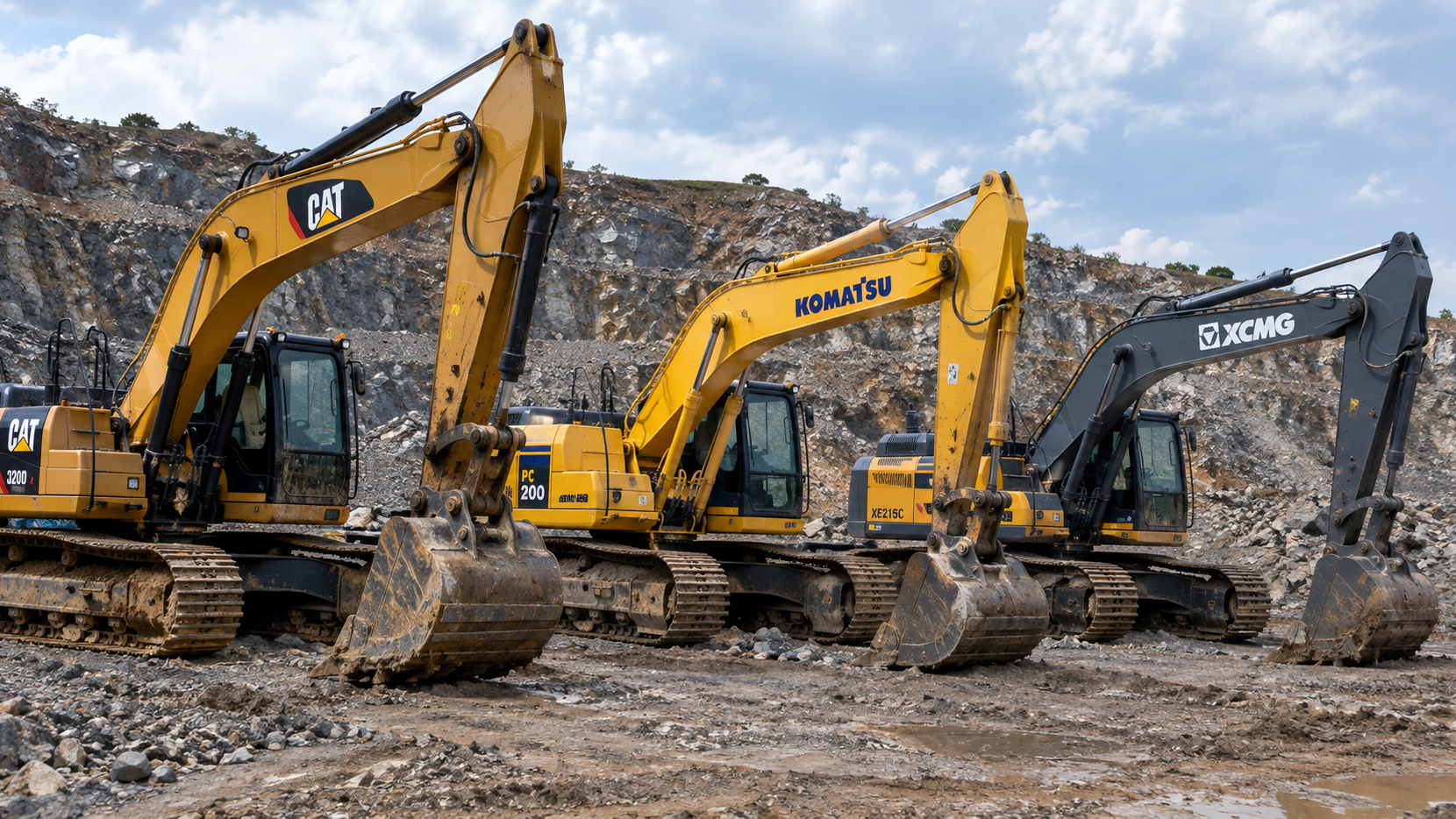
Quick Answer: Komatsu generally delivers the strongest balance of durability and parts support across East and Southern Africa, Caterpillar holds the highest resale value and the deepest dealer network through Mantrac, and XCMG offers the lowest purchase price and the fastest payback period for contractors working on tighter margins. For contractors asking which excavator is best for African conditions, the honest answer depends on where the machine will operate and how the fleet is financed.
Introduction: Caterpillar vs Komatsu vs XCMG Supreme Rivalry
Caterpillar vs Komatsu vs XCMG excavator comparisons in Africa are a conversation every serious African contractor eventually has before signing off on a 20-ton excavator purchase or hire. These three brands now account for the large majority of 20 to 22-ton excavators working on roads, quarries, and building sites across the continent, yet no independent comparison has tested them specifically against African operating conditions: heat, dust, poor fuel quality, long haul distances to parts depots, and inconsistent servicing schedules.
This guide conducts a full Caterpillar vs Komatsu vs XCMG excavator comparison across price, reliability, dealer support, resale value, and total cost of ownership, using real pricing data from Kenyan and African regional markets, so buyers evaluating heavy equipment for African construction sites can make decisions based on numbers rather than brand reputation alone.
Key Takeaways
- A new 20 to 22-ton Caterpillar 320GC excavator costs approximately KSh 10.7 million (approximately USD 82,000 to 85,000) in Kenya, making it the most expensive of the three brands at purchase.
- Komatsu, sold through Panafrican Equipment across much of East Africa, ranks close to Caterpillar in reliability but typically prices 5 to 15 percent lower on comparable 20-ton-class models, a key data point in any Caterpillar vs Komatsu excavator decision in Africa.
- XCMG excavators such as the XE215C typically cost 30 to 45 percent less than Caterpillar or Komatsu equivalents, which shortens the payback period on high-utilisation projects and drives most XCMG excavator cost vs Caterpillar searches.
- Fuel consumption on a 20-ton-class excavator runs 15 to 30 litres per hour regardless of brand, so fuel cost differences among the three are driven more by operator habits and engine load than by manufacturer.
- Parts availability and dealer network depth, not raw machine quality, are the single biggest factors separating these brands in practice, and the deciding factor behind most excavator maintenance costs in Africa.
How Do Caterpillar, Komatsu, and XCMG Excavators Compare on Price in Africa?
Purchase price is the first filter most contractors apply, and it is also where the three brands diverge most sharply. Caterpillar commands a premium built on brand trust and resale liquidity. Komatsu sits just under it. XCMG undercuts both by a wide margin, which is the main reason Chinese brands have gained ground so quickly on African sites over the past five years, and why an XCMG excavator review in Africa now belongs in almost every procurement shortlist.
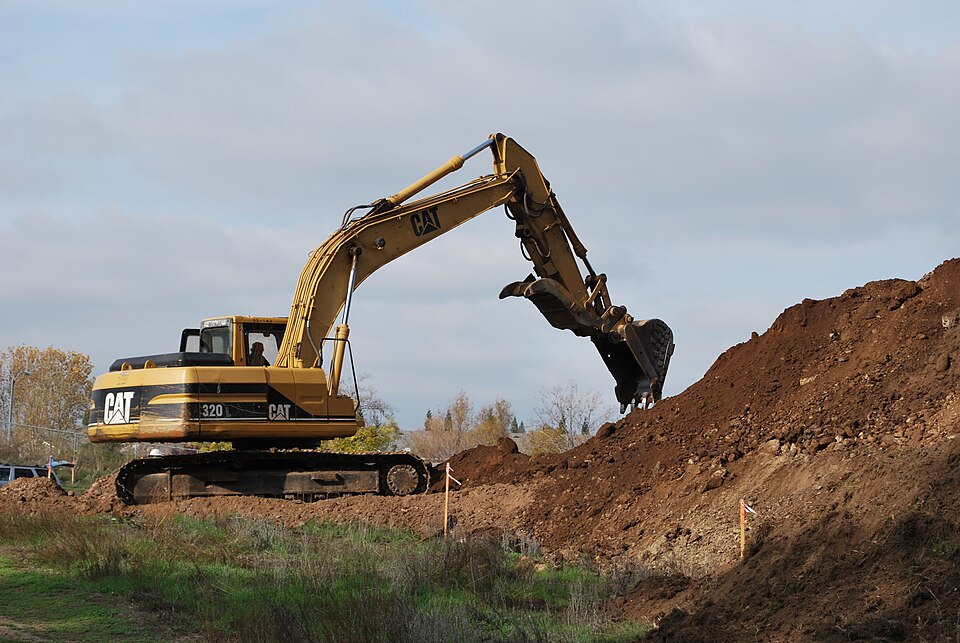
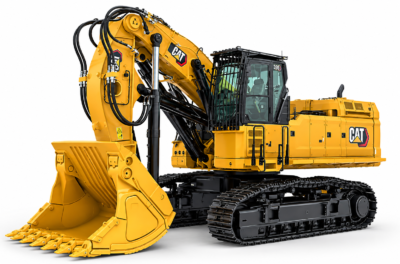
CAT 320 excavator in operation. (Source: Wikimedia Commons)
Estimated 20-22 Ton Excavator Prices and Dealers in Kenya (2026)
| Excavator (20 to 22-ton class) | Approx. new price (Kenya) | Approx. USD equivalent | Regional dealer example |
| Caterpillar 320GC | KSh 10.7 million | USD 82,000 to 85,000 | Mantrac |
| Komatsu PC200-8 | KSh 9.0 to 9.8 million | USD 70,000 to 76,000 | Panafrican Equipment |
| XCMG XE215C | KSh 6.0 to 7.5 million | USD 46,000 to 58,000 | TISCO and other authorised XCMG partners |
Used-market pricing tells a similar story. Older Caterpillar 320 and 320B units from the 1990s and 2000s still trade actively in the KSh 3 to 6 million range because of strong parts commonality across decades of production, something neither Komatsu nor XCMG can match at the same used-market depth in Africa yet.
Financing structure also shifts the effective price gap: Caterpillar and Komatsu dealers typically offer asset-backed hire purchase terms through established local banks, while XCMG financing is less standardised outside a handful of urban centres, so buyers comparing the cheapest reliable excavator brand in Africa options often need to factor a larger cash deposit into the XCMG purchase decision, even though the sticker price is lower.
Since the Komatsu PC200 and Caterpillar 320 are the two most cross-shopped machines in this class, our model-level Komatsu PC200 vs Caterpillar 320 excavator comparison breaks down the spec sheet differences in more depth than a three-way brand comparison can.
Which Excavator Brand Is Most Reliable in African Operating Conditions?
Excavator reliability in Africa is less about factory-built quality, which is broadly comparable across all three brands’ current-generation machines, and more about how each design tolerates dust ingestion, low-grade diesel, high ambient temperatures, and extended service intervals when parts are delayed.
A Caterpillar excavator performance review for African fleets consistently points to well-proven engines and hydraulic systems on continuous, high-load applications like quarrying, backed by decades of field data from African mining and infrastructure projects. Komatsu excavator durability, particularly on the PC200 series, is built on a strong reputation for hydraulic system longevity, and the brand is frequently the preferred choice for contractors running two shifts a day.
In a direct XCMG vs Caterpillar excavator matchup, XCMG’s newer models have closed much of the reliability gap that once separated Chinese excavator brands from American brands, especially on the electronic and hydraulic control side, though long-term durability data past 8,000 to 10,000 hours is still thinner in African fleets simply because the machines have not been in-market as long.
The Chinese vs Japanese construction equipment debate that dominated African contractor forums a decade ago has narrowed considerably as a result, and questions about Chinese vs Japanese excavator reliability, or, more broadly, Chinese vs Japanese vs American heavy equipment in Africa, now turn on dealer support and duty cycle more than on factory pedigree. The practical difference between an XCMG and a Komatsu on most job sites today is smaller than brand reputation alone would suggest. XCMG is not the only Chinese manufacturer making this case. For a broader view of how it stacks up against its closest domestic rivals, see our review of Chinese construction equipment in Africa, which covers XCMG, SANY, and Liugong.
Fuel consumption is broadly similar across brands in this weight class. A realistic working range for a 20-ton excavator is 15 to 30 litres per hour, depending on load and duty cycle, so brand choice should not be your primary lever for fuel savings; operator training and load management matter more.
How Do the Three Brands Handle Heat, Dust, and Altitude?
African operating conditions vary enormously, from coastal humidity in Mombasa to high-altitude quarry sites in the Ethiopian highlands to the fine, abrasive dust common on unpaved roadworks across the Sahel, and the answer to which excavator is best for African terrain changes with each of those environments.
Caterpillar’s cooling packages and air filtration systems are generally rated for sustained high-ambient-temperature operation, making it a strong candidate as the best excavator for hot-climate construction in low-altitude, high-heat regions such as coastal East Africa and much of West Africa. Komatsu’s hydraulic systems run slightly cooler under sustained load in field reports from quarry operators, which can translate into fewer seal and hose failures on continuous crushing and loading cycles, a factor that matters for anyone weighing Caterpillar or Komatsu excavators for mining in Africa and treating durability under continuous load as the deciding criterion for the most durable excavator for African mining.
XCMG has made visible improvements to cab sealing and air intake filtration on recent XE-series models specifically to address excavator performance in dusty conditions, following complaints from earlier generations sold into African markets. That said, contractors working in the driest, dustiest conditions, such as open-pit quarry faces or Sahelian road corridors, should budget for more frequent filter changes on any brand, XCMG included, until longer field data accumulates locally. The same filtration and cooling considerations apply broadly to heavy equipment for tropical construction sites and to machines operating on excavators in rocky terrain in Africa, where undercarriage wear compounds the dust problem.
Altitude affects engine power output on all three brands similarly, since each uses turbocharged diesel engines with broadly comparable derating characteristics above 2,000 metres. If your project is in the Ethiopian, Kenyan, or Rwandan highlands, ask your dealer for the specific power curve at your working altitude rather than assuming sea-level spec sheets apply. Contractors evaluating the best excavator for road construction in Africa should apply the same altitude and dust checks before committing to a brand. If none of these three brands quite fits your project, the premium mid-tier segment is worth a look too; our Volvo vs Hitachi excavator comparison applies the same African-conditions framework to the two brands gaining the most share against Caterpillar and Komatsu.
How Do Dealer Networks and Parts Availability Compare?
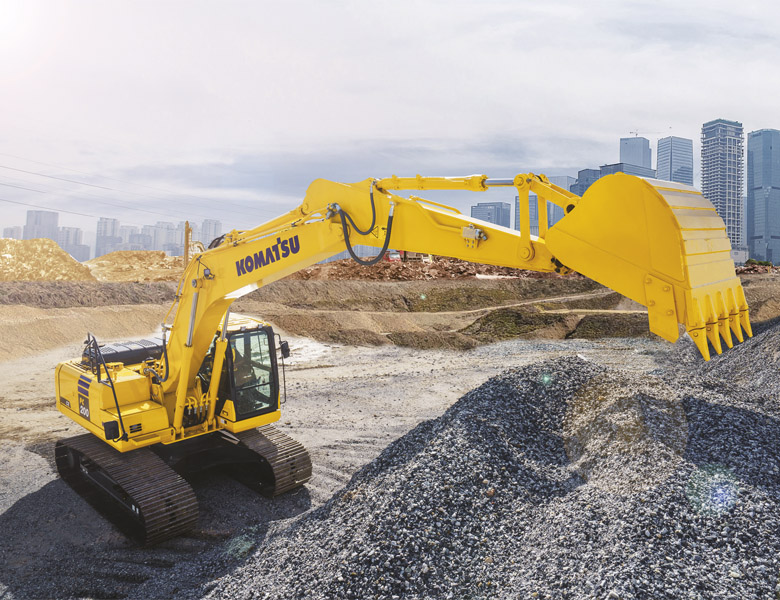
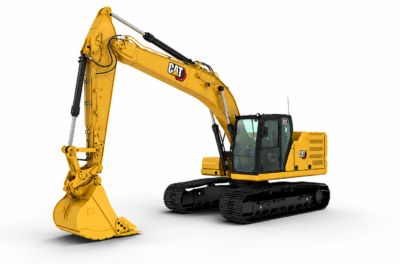
Komatsu PC200 excavator in operation. (Source: Komatsu Africa)
This is where the real separation between the three brands shows up on African job sites. A machine that cannot be repaired within a few days of a breakdown is a liability, regardless of how well it was built, and it is the single biggest driver of ongoing excavator maintenance costs in Africa.
Caterpillar’s African dealer network, anchored by Mantrac across Kenya, Uganda, Ghana, Nigeria, and several other markets, is the most extensive of the three. Genuine parts, trained technicians, and financing support are typically available within major cities and along key transport corridors, which is why contractors asking about the best excavator brand in Nigeria, Kenya, South Africa, or Ghana tend to default to Caterpillar first.
Komatsu’s network through dealers such as Panafrican Equipment is smaller but well-established in East Africa, with reasonable parts turnaround times for common wear items and solid support for excavators and parts. XCMG’s network is younger and growing quickly, with authorised partners now handling engine, hydraulic, and undercarriage parts locally in Kenya rather than requiring imports, addressing earlier concerns about excavator spare parts availability in Africa, but coverage outside major hubs remains thinner than the other two brands.
If your project sites are remote or far from a regional capital, this factor alone may outweigh the purchase price. A practical rule of thumb: if your nearest authorised dealer branch is more than four hours away by road, weigh the cost of holding a small local stock of high-wear parts (filters, seals, bucket teeth) into your total cost of ownership, regardless of which brand you choose. Caterpillar, Komatsu, and XCMG compete just as directly outside the excavator category, and the dealer-network logic holds across their other equipment lines too.
If your fleet also needs road-building machinery, our Caterpillar 140 vs Komatsu GD655 motor grader review applies the same framework to graders. If you’re sourcing lifting equipment, our Liebherr vs Tadano vs XCMG mobile crane comparison covers how XCMG’s crane-side dealer support compares to two established Western brands.
Which Excavator Has the Best Resale Value in Africa?
Caterpillar excavators consistently hold the strongest resale value across African secondary markets. A well-maintained CAT 320 series machine with clear service history retains a meaningfully higher percentage of its original value after 8,000 to 10,000 hours than either a comparable Komatsu or XCMG unit, largely because buyer demand for used CAT machines is deeper and more geographically distributed. On resale value, Caterpillar vs Komatsu vs XCMG, Komatsu holds the second-strongest position, particularly in markets where Panafrican Equipment has an established used-equipment desk. XCMG resale values are improving as more units enter the secondary market with verifiable service records, but the used-market infrastructure for Chinese brands in Africa is still catching up to that of Caterpillar and Komatsu.
Documented service history matters more to resale value than brand alone. A Komatsu or XCMG unit with a complete, verifiable maintenance log will often outsell an undocumented Caterpillar of similar age and hours, because buyers in this market price uncertainty aggressively. If resale value is a core part of your ownership strategy, build a maintenance record from day one, regardless of which brand you choose. The same resale logic applies one size class down. For smaller sites and utility work, our JCB vs Caterpillar backhoe loader comparison examines how documented service history affects resale in this equally competitive segment.
What Does Total Cost of Ownership Look Like Over Five Years?
Purchase price alone is misleading. A proper total cost of ownership for an excavator in Africa needs to account for financing, fuel, scheduled maintenance, parts, and expected resale value at disposal. The table below models a typical scenario: 2,000 operating hours per year, a moderate digging-and-loading duty cycle, and a five-year hold period.
5-Year Total Cost of Ownership (TCO) Comparison for 20-Ton Excavators in Kenya
| Cost category (5-year, 10,000 hours) | Caterpillar 320GC | Komatsu PC200-8 | XCMG XE215C |
| Purchase price | KSh 10.7 million | KSh 9.4 million | KSh 6.8 million |
| Estimated fuel cost | Similar across all three brands | Similar across all three brands | Similar across all three brands |
| Scheduled maintenance and wear parts | Moderate to high, premium OEM parts pricing | Moderate | Lower parts cost, less mature local supply chain |
| Estimated resale value at year 5 | 40 to 45 percent of the new price | 32 to 38 percent of the new price | 20 to 28 percent of the new price |
| Relative downtime risk (remote sites) | Low, deepest dealer coverage | Low to moderate | Moderate, improving |
The pattern that emerges: Caterpillar’s higher upfront cost is partially offset by its superior resale value, narrowing the effective total cost-of-ownership gap relative to Komatsu. XCMG remains the cheapest reliable excavator brand in Africa on a like-for-like purchase basis, and the lowest total cost option for contractors who plan to run the machine hard and are less concerned with resale value, or who operate close to an established XCMG parts partner.
On a straight XCMG excavator-versus-Caterpillar cost basis, the gap only widens once financing terms are factored in. For a contractor financing the purchase, the lower deposit and monthly instalment on an XCMG machine can also free up working capital for fuel, labour, and other project costs, which matters as much as the headline total cost figure for affordable excavator brands for African contractors working on tightly financed projects.
Which Brand Should You Choose for Your Project?
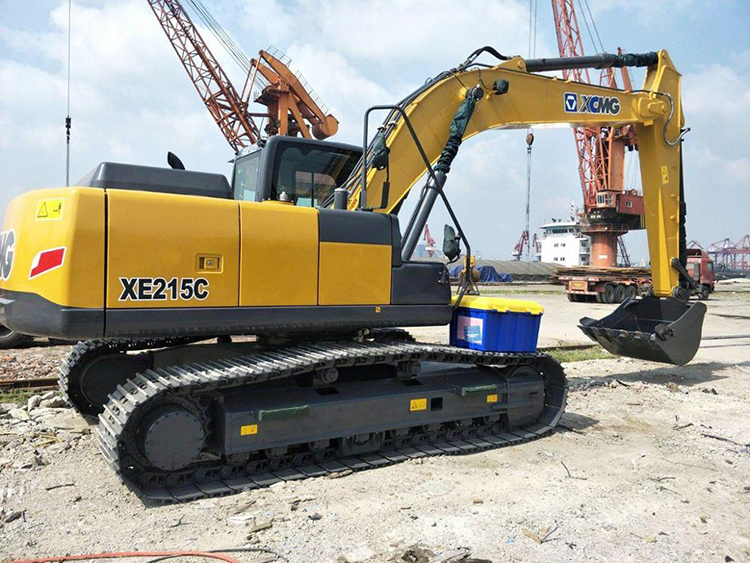
XCMG XE215C excavator. (Source: MachMall)
Choose Caterpillar if your project is long-term, capital is available upfront, and you place a high value on resale liquidity and dealer coverage in remote regions.
Choose Komatsu if you want a strong balance of reliability and price, particularly for contractors running intensive two-shift operations in East Africa, where Panafrican Equipment’s support network is strong.
Choose XCMG if purchase price and payback period are your primary constraints, and you have confirmed local parts and service access before committing.
There is no single winner when it comes to the best excavator brand for Africa. In practice, many established African contracting firms run mixed fleets rather than standardising on a single brand, using Caterpillar or Komatsu for core, high-utilisation machines and XCMG to add capacity cost-effectively for shorter contracts or lower-intensity site work. Building out the rest of a site fleet raises the same brand and dealer-support questions across other construction equipment brands in Africa and other equipment categories. If your project also needs batching plants, pumps, or mixers, our concrete equipment review for African construction applies the same cost and reliability lens to that category.
If you’re weighing brand decisions across your entire fleet rather than one machine class at a time, our full-ranked guide to the best construction equipment brands for Africa puts Caterpillar, Komatsu, and XCMG in context alongside every other major manufacturer active on the continent. This approach spreads dealer-network risk and lets a fleet manager match machine cost to project margin rather than committing the entire fleet to one brand’s price point.
Ready to compare machines directly? Browse verified Caterpillar, Komatsu, and XCMG excavators available for purchase across Africa on PlantBridge Africa’s excavator marketplace. Listings include hour meters, service history, and dealer verification status.
Frequently Asked Questions
Is Komatsu or Caterpillar better for excavators in Africa? Both are strong choices. Caterpillar has a wider dealer network and better resale value, while Komatsu is often slightly cheaper to buy and equally reliable for two-shift operations. The right choice depends on how close you are to a dealer branch and whether resale value matters to your business model.
Are XCMG excavators reliable for African construction sites? Current-generation XCMG excavators have closed much of the reliability gap with established Japanese and American brands, particularly on hydraulics and engine performance. The main risk is parts and service access outside major cities, so confirm local dealer support before buying.
How much does a Caterpillar 320 excavator cost in Kenya? A new Caterpillar 320GC in the 20 to 22-ton class is listed at approximately KSh 10.7 million (around USD 82,000 to 85,000) in the Kenyan market as of early 2026. Used units from earlier model years are available from roughly KSh 3 million, depending on hours and condition.
What is the resale value of a Komatsu PC200 in Africa? Komatsu PC200 series excavators typically retain 32 to 38 percent of their original purchase price after five years and 10,000 hours of moderate duty use, assuming documented service history and no major component failures.
Can you get XCMG spare parts easily in East Africa? Yes, in major hubs. Authorised XCMG partners in Kenya now stock engine, hydraulic, and undercarriage parts locally rather than requiring import orders, though availability thins out considerably away from Nairobi and other regional centres.
Which excavator brand has the lowest fuel consumption? Fuel consumption for 20-ton class excavators is broadly similar across Caterpillar, Komatsu, and XCMG, typically 15 to 30 litres per hour depending on load. Operator technique and duty cycle affect fuel use more than brand choice at this weight class.
Is it worth buying a Chinese excavator brand over Caterpillar or Komatsu? For contractors prioritising low upfront cost and fast payback on high-utilisation work, XCMG offers a genuine value proposition. For contractors prioritising resale value, dealer coverage in remote areas, or long-term fleet consistency, Caterpillar or Komatsu remains the safer choice.
Conclusion: Matching the Right Machine to Your Project
The Caterpillar vs Komatsu vs XCMG excavator Africa decision is not really a search for a single best excavator brand for Africa; it is a matter of matching machine economics to project length, site remoteness, and financing structure. Caterpillar wins on resale and dealer reach, Komatsu wins on the balance of reliability and price, and XCMG wins on upfront cost and payback speed. None of the three is a universally correct answer, which is exactly why so many established contractors end up running mixed fleets instead of standardising on one badge.
Whichever brand a contractor ultimately chooses, confirming local parts access and building a documented service history from day one will do more for long-term ownership costs than the brand badge on the boom. Before signing a purchase or hire agreement, verify dealer proximity, ask for the specific power curve at your working altitude, and price in a small stock of high-wear parts if the nearest branch is more than a few hours away. Those three checks, more than any spec sheet comparison, are what separate a good excavator decision from an expensive one on African sites.
Pricing and specification figures in this article were compiled in July 2026 from Kenyan market listings and dealer sources. Equipment prices fluctuate with currency exchange rates, import duty changes, and dealer promotions; confirm current pricing with Mantrac, Panafrican Equipment, or your local XCMG dealer before making a purchase decision. This article will be periodically reviewed and updated.